Abbotsford: Leading from the front
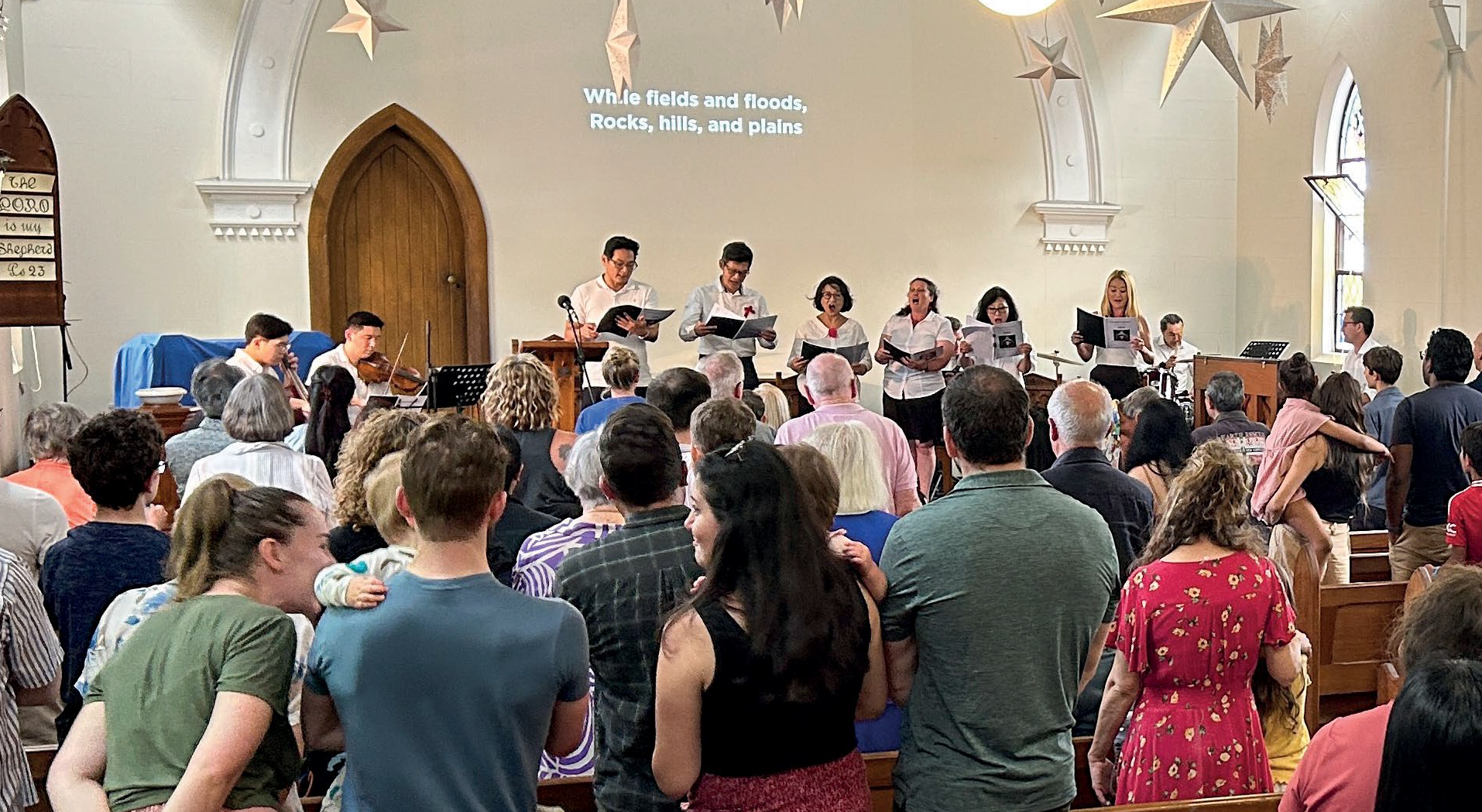
At Abbotsford Presbyterian Church, the sight of women leading from the front has become part of the normal Sunday experience.
“From my perspective, it feels pretty even,” says assistant pastor Becky Padgett. “We’ve got women... who lead the service and are involved in up-front ministries on a Sunday—apart from preaching—but otherwise there are women up front.”
As well as leading services, singing, praying, and reading the Bible, at Abbotsford women also oversee the growth groups ministry, children’s and youth ministries, and child protection. Women do not serve as elders or preach. However, the session is actively exploring ways to better involve female leaders in discussion and decision-making.
As lead pastor Darryl Soh explains, Becky has a standing invitation to the otherwise closed session meetings, where she is allowed to speak freely.
“Hearing Becky’s insights, feedback, and having her questions asked has been very helpful in every decision,” Darryl says. “We’re exploring how we can get more women at the elders’ meeting—not as elders, but to make sure they have a seat at the table in some form,” he says.
For Becky, involving women in various ministries goes deeper than just representation.
“The main thing for me is for women who visit or are part of the church to feel safe and welcome—to feel like this is a space where women are valued and [recognised as] created in God’s image,” Becky says. “I feel like we’ve had visitors who have expressed that sentiment—noticing that there are women involved, which I think is important. I think it’s been helpful with the younger generations to see, especially at youth group.”
Darryl has now engaged Becky in giving the announcements during church services, and the ripple effects have been encouraging.
“Having Becky lead church has added to the critical mass of women who feel confident to lead the gathering,” he says.
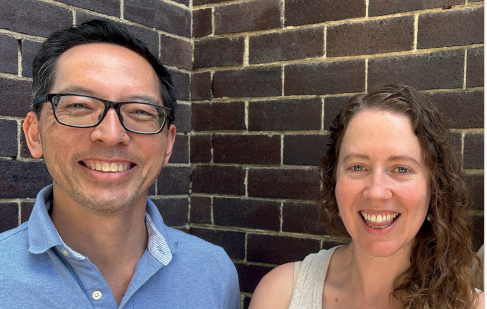
(Darryl Soh and Becky Padgett.)
Navigating the Challenges
The path to increasing women’s involvement in leadership wasn’t without its complexities however, particularly for a smaller church with diverse theological perspectives.
“We have people who are egalitarians and people who are very conservative—groups on both ends of the spectrum regarding women in ministry,” Darryl acknowledges.
The evolution began with Carmen Wagenaar, Becky’s predecessor, who was initially employed in an administrative role.
“Relationally, everyone loved Carmen and recognised the value she brought,” Darryl says. “When I said she’s doing this job well and we should expand her role officially, because she was a known quantity, that was fairly smooth.”
The theological alignment of the female staff members also helped ease concerns. Carmen and Becky are both complementarian in their theology. For example, they are happy to see women involved in ministry without feeling the need to preach. Many conservative members found ways to support greater female involvement, but some needed time.
“When we started having women lead the church service, that felt uncomfortable to [some] who were conservative, but once they saw it wasn’t done in a teaching, authoritarian way, they felt more relaxed. Now it’s become part of the culture.”
For Becky, the overall experience has been overwhelmingly positive.
“It’s been such an encouragement to be part of a church that values men and women equally. It doesn’t feel like a hot topic we have to skirt around—it’s clear that men and women are both valued,” Becky says.
“It just feels like it’s part of valuing and caring for all of us as members of the church.”
The success at Abbotsford Presbyterian demonstrates that churches can find creative ways to honour both theological convictions and the diverse gifts within their congregation, creating a culture where everyone feels valued and heard.
Click here to read more from our Ministering Together magazine.